
Apple Eye — 3:58 AM
The “AD” Angel of Death holds the “7” scythe to remind you to die at 7 and do not proceed to 89, it is merely a suggestion.
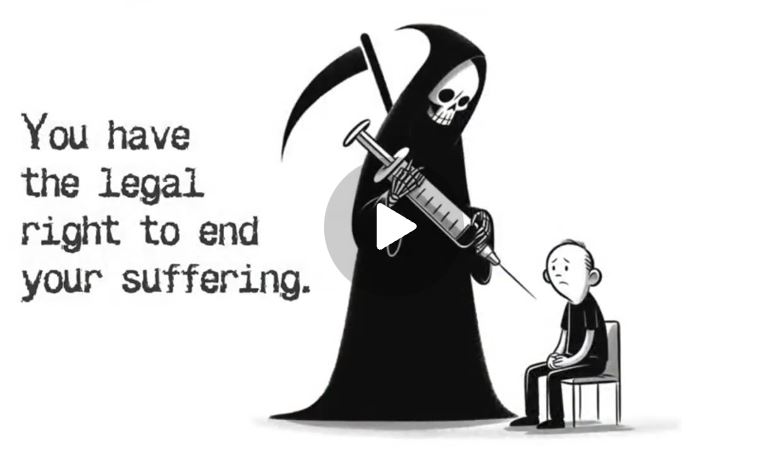
it is ultra obvious to the point every person is overcome with shame (shhh * Aim)
More than 1/2 of the nations allow euthanasia by law.
𝖒𝖆s🪐ꙮ — 4:45 AM
id like to know the story of how we chose to live
will you tell me this story youve found , please ?
Apple Eye — 4:55 AM
3 stages of the human species; Unity, Separation, Aggregation
there are no opposites, we hv created that with our mental power
we are each born with a FIRE to “know thyself” and that fire never goes out
“LI” + ar – itza code, values are self determined; “LI” is the Logic/Intuition and the “LI-ght” to seize it. The “ar” is a thing and between them is the * the child God mediator between Logic/Intuition & Light/Dark(the invisible, intangible, and undefinable).
money is the basis of ignorance of the soul
politics is not the solution
Conr — 1:28 PM
rwhat do you mean by that then? I assume you are anti reformism?
Apple Eye — 1:29 PM
Dont assume, work for it
The statement was in plain English
What is your question
Conr — 1:33 PM
:Deadinside:
Apple Eye — 1:35 PM
“dead” happens in the light, outside
Conr— 1:35 PM
Ight, perhaps my sarcasm escalated the convo to be more tense than it should be, I am simply asking in practical terms what do you mean by adapting socialism to American conditions. Just cause that could be something we could explore
Also like not an offensive statement but were you actually born in 1960
Apple Eye — 1:36 PM
yes, ppl often see me as a carnival act to exploit
Conr— 1:38 PM
I was mostly doing that cause you said “money is the basis of ignorance of the soul” and then didn’t elaborate. I was being a little rude ill be real but I’m mostly just curious to know what your actual politics are
Apple Eye — 1:39 PM
i started unwrapping the mysteries at age 7 in 1967
i swore then i would not be fooled again
my politics are “know thyself” and save humanity
Righteousness is self evident and needs no dogmas or doctrines
Val— 1:45 PM
you have aura
Apple Eye — 1:46 PM
In Latin times air, aura, spirit, and soul all had same meaning – see again in 1510 DaVinci Codex
Val — 1:47 PM
what movements/people have influenced you or, what should i read
Apple Eye — 1:47 PM
use me now by asking a question and we will get to the ref materials
Speech is the number one medium
Val — 1:48 PM
id agree with that
Apple Eye — 1:49 PM
i ama pro writer on the topic
Philology in year zero to i345AD was the only science of the soul
Val — 1:50 PM
do you like wittgenstein
Apple Eye — 1:50 PM
philosophers are generally political animals
Val — 1:50 PM
what about theologians
Apple Eye — 1:50 PM
but each of us has unique value, God is observable, we have chosen to explore ignoring it, we have power and domain over our mental values and choices
Val — 1:52 PM
ok id agree with that as well, what do you think of jung
Apple Eye — 1:52 PM
anyway, i will share ref materials and teachers if you recognize me as living
work for it by asking me, a living person any question abt birth, life, death, or why
Apple Eye — 1:57 PM
oh wheel
Old_B — 2:02 PM
What wheel
Apple Eye — 2:20 PM
EZ Killz Wheel, Club of Rome handed it to the UN in their first year
same year SM ALT-Man was born
Apple Eye — 2:25 PM
natl debt is collateralized by boomer investments and holdings of 150 trillion and
it will alll be stolen
Cat J — 2:26 PM
in what sense
Apple Eye — 2:26 PM
their debts are being collected now
what they owe from abandoning the childern
from the boomers perspective, it is being heisted
from natures perspective, parity is achieved
all history is reserved to each human anatomy, we share it via the air
Apple Eye — 3:01 PM
BANNED
what about monitorization?
Monitor-zation is the capturing of personal data and source power of individuals in a monetized society.
Going back to when circ and kirk means church in Old English, before cathedrals had crosses on them.
Has The U.S. Become A Surveillance State?
About
Since the start of the second Trump administration, there’s been open debate about whether the United States is descending into a modern high-tech surveillance state. But is there any truth to that? And what can existing surveillance states tell us about where the U.S. might be along the path? Today WIRED takes a deep dive to determine just that.
Released on 11/17/2025
This is Incognito Mode.
What I think about is a state where the government’s tracking or recording
of people living in this state keeps them from doing things, chills their speech. To me, that’s what a surveillance state is.
I think about this idea of a panopticon where perhaps the government isn’t watching everything that everyone’s doing, but there’s always the potential that you could be watched and you feel watched all the time because you never know if they’re watching, and, therefore, you have no fundamental sense of privacy.
To me, a surveillance state is a society where the government is fundamentally hostile to privacy. I would agree with both of those definitions. I guess, for me, it’s a state that has both the capabilities to surveil everyone on a mass scale and the political will to do so, and that results in impacting people’s lives in meaningful ways.
According to Privacy International, a surveillance state has a number of specific characteristics. This includes mass surveillance of residents, avoidance of democratic oversight, surveillance of threats to the state, and of threats to the surveillance apparatus itself, operates in secrecy, and vilifies those who protest or resist the surveillance, compels the private sector to share data on people with the government or even sells data on people to the private sector, uses surveillance as a solution to social problems, and uses its surveillance powers
beyond the original justification for them.
Why would a state want to impose so much surveillance on its citizens? It seems like it’s creating a lot of work and spending a lot of money to do something that might not have a lot of benefits to anyone.
I think that, you know, a surveillance state preserves the status quo and makes the powerful more powerful. That’s what dictators want. That’s what the elites always want in any country, including the U.S., which I think is why we’re asking this question today of whether the U.S. is one of these surveillance states now too.
Perhaps the three most common examples are China, North Korea, and Russia.
China has built the most technologically-advanced and expansive surveillance apparatus on Earth. The country has roughly 700 million cameras. Many are equipped with facial recognition as well as a system called City Brain, which uses AI and data collection for so-called urban management.
The system fuses information from public cameras, cell phones, financial transactions, and even health and e-commerce information to track citizens in real time. The system was developed by Alibaba Group, and that’s just talking about cameras.
China’s government developed the internet and all types of telecommunications
to be centralized in a way that it can surveil pretty much everything everyone does online or over the phone at any time. China has been developing
a digital surveillance state for decades.
That has sort of been a hallmark initiative of their regime, is the Great Firewall.
Their model was to build that into all their digital technology,all the infrastructure of the telecoms, everything from the ground up.
The amount of internet censorship in China is widespread and really obvious.
Popular social media sites are banned in China. Instead, you have to use social mediadeveloped domestically in China, which the government has a massive amount of control over.
A lot of this might sound similar to what’s happening in the U.S. or other Western countries,but the reason people call China a surveillance state is because its systems were developed with surveillance in mind from the very beginning.
Just as the open internet was developing across the world, China was building an alternative version that had tight, centralized control that really imposed a lot of limits on what people could say and do online.
And then there’s a true totalitarian state, like North Korea, which I think of as the quintessential surveillance state that actually is not digital at all for most people.
Most people don’t even have access to the internet. Those who do, it’s completely, entirely surveilled.
Those are mostly elites and government employees. But then for everyone else,
there’s a kind of analog surveillance state through informants, through a whisper network of neighbors, snitching on each other and being incentivized to do so, so that there really is no privacy, or at least that is the intention of the regime of Kim Jong Un.
In North Korea, surveillance enforces loyalty, and dissent there can mean imprisonment. Virtually, all aspects of life are under surveillance in North Korea.
Classrooms, workplaces, roads, even homes, are subject to surveillance.
It’s been reported that as many as one in 20 North Koreans participate in the surveillance network, making privacy virtually non-existent.
In Russia, the surveillance state is really geared toward shutting down dissent.
So much so that human rights advocates call this a cyber gulag. Authorities scan the internet every day to find photos and videos showing banned content.
They use cameras equipped with facial recognition to identify and track protestors. Online censorship has expanded drastically, with hundreds of thousands of webpages blocked annually.
Russia is more of an example of trying to retrofit and come to that digital surveillance later and invest the time and the energy retroactively. But what’s interesting to me now is that I think digital technology has potentially evolved
to the point where that is an even lighter lift than ever for a state because of the private sector capabilities that are already in place.
Yeah, I mean, you see this in just kind of the nature of the internet where things are so centralized now. We have so much internet traffic that goes through Silicon Valley companies, the cloud giants, like Amazon and Google.
Retrofitting the surveillance is relatively easy compared to how it might’ve been
in the earlier days of the internet where everything was much more decentralized.
So there are a lot of elements that make a surveillance state a surveillance state or not. To try to whittle this down, on a scale of one to 10, with 10 being North Korea, one being a place that no longer exists in the world, I guess, Antarctica,
where would you place the United States as a surveillance state or not?
Like a seven, but I start my surveillance state zone at, like, a five or a six.
I was gonna say a kind of creeping six, but that already puts the U.S. into surveillance state territory by your definition. We can have different scales. I think a five or a six. I feel like we are more than halfway there and creeping up all the time.
I would put it at about a seven or even an eight because the switch could be flipped pretty easily for all the tools that exist, all the data that’s being collected to be used in a way that we have never imagined would be possible in the United States.
I would amp it up just a little bit because the risk is so obvious in this moment
that I think we have to take it very seriously.
Lily, do you consider the U.S. a surveillance state right now?
I think the U.S. has been moving toward becoming a surveillance state for a while, but, to me, that means that the capability exists for it to be classified that way if there was the political will, and now I think it is starting to fully qualify for that title.
There are lots of groups of people around the U.S. who don’t feel comfortable posting what they really think about things on social media anymore.
People talk about, well, if somebody already knows everything that’s on my phone anyway, or things like that.
So to me, yes, I think the U.S. is in the transition to becoming one.
Well, I don’t wanna sound like an apologist for the U.S. government, but I don’t think it’s maybe helpful to call the U.S. a surveillance state yet, maybe it is becoming one. There’s a really big difference between the U.S. and a country like China or Russia, or God forbid, North Korea.
And the main one to me seems that the U.S. has outsourced surveillance to the private sector in many ways. I wouldn’t call the U.S. a surveillance state so much as maybe a surveillance economy at this point. We are the world’s epicenter of surveillance capitalism. We practically invented it.
So your phone is constantly being tracked by which cell towers it’s connecting to
and the crappy mobile games that you have on it that are watching your every move. But that’s not actually the NSA listening to your phone calls in the way
that the Ministry of State Security might in China. The end result might be the same though.
And there are ways in which I think to your point, Lily, U.S. government is completely co-opting that private sector surveillance and using it and also dialing up its own surveillance too. I guess I agree with both of you in that we are unique in just the level of surveilling we’re doing ourselves, just by engaging in the digital economy and having phones and being on the internet all the time, and we’ve normalized being tracked, being monitored, that everything we post is public, or you can’t assume that it’s not. I think we are a surveillance state
if you are a vulnerable person. I think it really depends on who you are and what your vulnerabilities are, and that is gonna determine whether you feel like you live in a surveillance state or not.
And I think if you feel perfectly free to say whatever you want to say or anything of that nature, you probably don’t feel like you live in a surveillance state.
If you don’t feel like you can leave your house because masked agents are going to snatch you or members of your family, you probably feel like you’re very much living in a surveillance state. And that’s where we’re at right now.
There’s a class system within the level of surveillance that we have in the United States. Yeah, to Andrew’s point, we are already seeing what a U.S. surveillance state looks like for the have-nots. We are a have and have-nots society.
For undocumented migrants, their surveillance by ICE is equivalent to a surveillance state. For people who are in the margins of society and are forced into the drug trafficking trade, the war on drugs remains the source of the vast majority of U.S. government surveillance.
Last year, 80% of court-authorized wire taps targeted drug operations, drug dealers. So that is who is actually in a surveillance state today. I would say that the rest of us, we have this luxury of maybe for now pretending that’s not happening, but also are being surveilled in our own ways, largely through the for-profit services we use.
Part of a state being a surveillance state is the political will to make it such, and we are seeing an expansion of who is deemed an enemy within the United States, and even just declaring the Democratic Party part of a terrorist organization hearkens back to the PATRIOT Act and everything that followed the September 11th attacks and the vast expansion of the actual surveillance state that exists in the United States in the past 24 years.
And right now, we’re seeing kind of a vast expansion, not just of the technical capabilities, which continue in the background all the time, but in the political will to surveil an increasing number of Americans.
Exactly. If you looked at what Edward Snowden revealed in 2013 and what he said about it even, he was, in many cases, not actually trying to point to contemporaneous surveillance. He was warning about the capability for surveillance, and he talked about this idea of turnkey tyranny.
The capability is there, and as soon as we have a tyrants in place who wants to exploit those capabilities, we will be in a surveillance state. The question now is, is that tyrants in the White House?
Well, and part of the definition of privacy protections relates to the idea that privacy has to be preserved even for people who are doing bad things, that privacy as a right can’t be applied selectively to certain groups. It has to be applied to all in order to exist for all.
I think that’s true. Moxie Marlinspike, the inventor of the Signal encryption app
used to say, yes, the idea of privacy tools is to enable people to break the law in some cases because that is actually how society evolves, and people didn’t have the privacy to have LGBT relationships.
When that was illegal in the U.S., we would never have gay marriage in this country. So this freedom to push the boundaries of what is not just accepted but legal is how we have progress in this country.
I think in terms of surveillance being applied because there’s bad guys doing bad things and we need to catch them, that is always the justification initially for surveillance.
But what is also true is that the surveillance never stops there. It increasingly expands because the authorities can see blind spots or they just think that they’re gonna have more success in doing whatever their job is if they surveil more and more people.
In prior generations, there are space to have underground movements. Now those spaces are online where they are, by default, in a panopticon.
I think it’s an excellent point that digital technology puts communication into a platform that can easily be surveilled, and I think DOGE’s activities in the centralization of all that data in a very quick, casual way without very much oversight was a good example of evolving sentiment or views on privacy.
Historically, the U.S. would’ve been allergic to that type of data sharing between agencies, state and federal data has always been very separated, and so the fact that now this administration is grabbing data, combining data from different sources so readily indicates a big shift.
So what are the arguments that the U.S. is a surveillance state, or at least becoming one?
The U.S. has a long history of surveillance, dating back to at least the 1700s, and the creation of slave patrols, which would quash uprisings and track down escaped slaves.
Fast forward to World War I and II, where we saw the beginning of the modern surveillance state, which was primarily used to surveil foreign enemies.
Then we get into the 1950s and the FBI under J. Edgar Hoover monitoring for communists and the whole Red Scare and the Cold War and the establishment of the NSA.
And then in the 1960s, surveillance apparatus was turned on anti-war and anti-establishment protestors and other dissident groups.
In the 1980s, we saw the rise of the war on drugs and the surveillance of Black and Hispanic communities. And then there’s 9/11 and the passage of the U.S. PATRIOT Act, which really established the US’ modern surveillance capabilities as we know them.
The culmination of hundreds of years of surveillance are a wide swath of intelligence agencies that engage in surveillance of all types, the NSA, the CIA, the FBI, Department of Homeland Security, the National Reconnaissance Office,
the Defense Intelligence Agency, and many more not well known authorities. Compounded by sharing with mega corporations is the business of receiveing government favor.
Now under the second Trump administration, we’re seeing surveillance tools historically used for combating serious crime and terrorism used against a widening group of people, from undocumented immigrants to the so-called radical left.
The Department of Government Efficiency, or DOGE, has created a master database that includes information from the Social Security Administration, the IRS, DHS, and even voting records.
Internal memos obtained by WIRED showed DOGE officials cross-referencing Social Security and IRS data against immigration data to track immigrants in real time. Oversight offices meant to protect civil rights have been gutted.
In March, 2025, executive order instructed agencies to share and consolidate all unclassified data across departments. One of the big red flags is how close many big tech executives have become with the Trump administration.
These companies have massive amounts of data on pretty much everyone, and we don’t know exactly how they’re sharing that data with the administration.
So what are the reasons the U.S. isn’t a surveillance state?
The first big one is that the U.S. is a democracy. That gives people the power to decide how much or how little they want to be surveilled, at least in theory.
The U.S. also has laws that limit the government’s ability to surveil its own people, and as powerful as the U.S. presidency is, there are checks and balances in place that limit the ability of the U.S. president to abuse surveillance powers,
like you might see in North Korea or China.
One of the core elements that makes a country a surveillance state is its political will to use surveillance against its own people. In the United States, we’ve seen examples of surveillance powers even being pulled back, which is really rare.
Take for example, the USA FREEDOM Act, which was passed in 2015 in response to revelations by Edward Snowden, who leaked a ton of classified information
about the National Security Agency’s surveillance of Americans and the world.
That shows the US has the capability of stopping surveillance that might be harmful for its own citizens, even if it has the tools to do so. And unlike under the regimes in China, Russia, and North Korea, Americans still have the ability to debate these issues openly.
This episode is an example of that. I think that what makes the U.S. different from China or Russia is in part that we have the option to turn on privacy, to seek it.
Tools like Signal or the anonymity tool Tor are legal in the U.S. and available and free. Then Tor, in fact, came from ideas developed in the U.S. government, and Signal was initially funded by a U.S. government agency.
That’s really different.
Yeah, and I think that really is at the core of why we’re having this conversation is that maybe there is a feeling that privilege is imperiled.
This has been Incognito Mode. Until next time. Original link: https://www.wired.com/video/watch/incognito-mode-has-the-us-become-a-surveillance-state