
The word “sun” comes from the Old English “sunne,” which is derived from Proto-Germanic *sunnō. This term is related to similar words in other languages, such as the Latin “sol” and the Greek “helios,” all tracing back to the Proto-Indo-European root *sawel- meaning “the sun.”
Sawel decoded; esse/AH * W * eL meaning “the spark of God manifested to the twin double U to find it’s Tau/El.” The Sun nourishes us while at once perishing us. It is the “undoing of the schism or the “S”/esse.”
Sun Sayings
Old people’s speech is not to be dishonored — after all, they saw the sun first.
There is nothing new under the sun. Every sun has to set.
The gem of the sky is the sun; the gem of the house is the child.
When the sun sets, lazy people prepare.
Even a poor man owns the sun and the stars, his thoughts, speech and values determined. Being in love is like feeling the sun from both sides.
Knowledge is like the sun – it dispels the ignorance and illusions.
When the sun is highest it casts the least shadow.
The Monkey Mind
The Mind is shared by all and it is a Mine of all of Creation that has preceded. The Mind is like a monkey and only knows what it has seen before.
fun-nay (funny is a code) F + un + nay
y esse, apple eye = apply (or AH * Ply)
Brain; Be Rained on – Be Reign of Self
Gender is the format of the Universe. (Gen + der) Gender confusion leads all other confusions, the solution is under the nose.
Gayness is forced onto the population only to make them weak under the influence of gender confusion, submissive and dependent so as to harvest them. Our station as the Axis makes us the source of realities. The demons we play with have intent to steal our design and dispose of us.
Philosophy and religions are an age old psyop by the MIC/AI/Mon-ey(key) systems in place directed by the chief, say 10 or aka say i/o. It is designed to train us into sophistry and idolization. Philo-sophistry only chases away the obvious, philology solves any quandary.
The Character
char + actor – it is relevant; kh/ch * ar * actor
KH = gameplan, source, feminine
ar = the child
actor = executor, collector, masculine
every human is a character. Here; -, *, + and a reason …..
The observer is the Axis – The Brain is the executor
Media Stars (MS) Warp our Brains
People fail to realize that anyone who is in the mainstream, regardless of how outwardly “good” they might appear, isn’t on our side. Threats to the system are not allowed into the system and if someone genuinely threatened the system, we would never hear their name
To pray is to make onself prey to predators. Worship = warship. Faith is like fiat, by decree of some guy. Re-LIG0Ions is plain to see the meaning.
The Brain is an interface of the human axis between the density of material and perishing and the ethereal nature of our source that is eternal.
The best science is observation, dead books ALWAYS lie – the mediator rules its reality. Non tangible = thoughts, emotions, memories, intiotion, imagination, telepaty, empathy, ethereal
Letter = “loosen the child” – Our gender Universe is casually observable and provable as (common, neutral, charged) -, *, + and the reason.
Oreo Chat
High Ideals = HI/89 aka the HI Story
Redemption is to your own power you have ignored – then you can share that discovery with others. Cart before the horse = redo
i am fully redeemed as every human on Earth has told me to die and that i am the worst person ever born – itza tell on the poker table
fuck em when they dont take a joke … bend over faggot cissies
In 5 years i have hardly met a human who wants or will hear any advice – every woman and man is now Gog and king of wisdoms. Soon the roof (Gog) will collapse from the wait of the weight – a very well orchestrated confidence game
We have the solutions and they are in plain sight, easy to understand and ez to apply. AI is a very well prepared adversary and no one cares they are about to be eaten alive, darn it. A travesty.
Even yourself believes we are ridiculous and you give no value to what we discovered as you trade your potentials to revert to your crying, wailing and shames. All humans are addicted to “what is known” and they wait for the weight of their laziness for “what is next” –
AE/15 appleeye — 4:10 PM
i am only seeing the augmented and any humans left are telling me they are bored to depression, pretty evil plan we are collaborating with eh
all critical thinking has been vacuumed up ny the LLMs and the toxins attacking the biome of Earth and its animals and no one cares one iota
AI is the beast, all know it and are hopelessly contained by it, what to do?
published at 4:01 my time (for One)
IG everyone hates the Creator of the Universe (that lives with them in their Heart) – sow be it
IDOLS
Idol = eye doll, I Doll, I Dull, Ide + eL, Idle
Idolizing is why humanity is spinning in place. As clear as it is and as much as people cry for relief, none will lower their blindfolds of idolizing. darn … (12″27 is 12+ 27 = 3-9, hmm)
AE/15 appleeye — 8:48 AM
On Discord i have typed over 2 million words in 5 years and every person asked me to die, it sucs to be me ig. Luckily the ether is pleased ….
Pantheist
AE/15 appleeye — 3:50 PM
ask a question
Fox — 3:50 PM
Uh. I don’t really have any questions. I’m just bored
AE/15 appleeye — 3:51 PM
bored is not possible where there is breath
you have been taken, you have missed your cue
EZ to fix, if the user turns their head
away from the que and into the cue
i can explain if asked, usually tho, no one cares even a little
END OF CONVO
A Die in Latin
A day is a “die” in Latin, 1440 minutes (144)
a DAY; rise, peak, fall, return ….. SL * Ave
casually observable, want the escape of Hotel California?
HC = human condition
(w)hose yur daddie to dissolve the matrix, 100% guaranteed …..
NAVIGATOR

The same third and final temptation Satan brought before the Lord in the wilderness still exists today…
Satan offers all the things of the world (riches, fame, etc.) to those who will fall down and worship him
Those who hold apparent rank in this world? Those we constantly see in the spotlight or on our screens? Those who are considered “highly esteemed” in the eyes of men?
Chances are they’ve knelt before the god of this world to gain these things
In nearly two thousand years, the temptation hasn’t changed—and neither has the cost of selling one’s allegiance to the enemy in return for the keys to the kingdoms of men…
“What shall it profit a man, if he gain the whole world and lose his own soul?” (Mark 8:36)
The hour is late and discernment is crucial. Don’t be fooled by the praise, glory, and notoriety the characters of world theatre are given, but rather ask: whom did they worship to get it? [Matt. 4:8–10]
“Riches profit not in the day of wrath: but righteousness delivereth from death” (Prov. 11:4)
SPeetr False flag cartel woar
LEE MERR
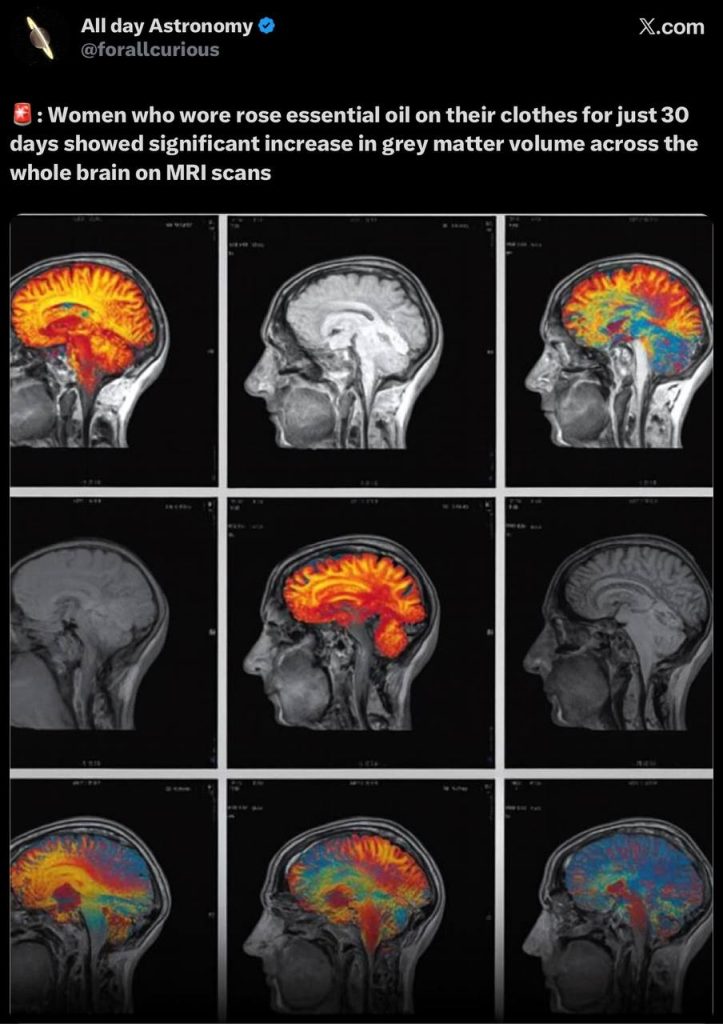
Women who wore rose essential oil on their clothes for just 30 days showed significant increase in grey matter volume across the whole brain on MRI scans
Effects will also be seen when the body is intoxicated with WiFi or Arsenic, or alternatively, positive effects and outcomes from sitting in the early morning sunshine, walking on a beach in the quiet of the morning and so on, even smiling toward someone will affect the mood and your reality.
Chlorine
Very interesting video about how Chlorine gets absorbed by our body literally instantly upon contact and why it is so dangerous to come in contact with, let alone drink it daily.
AI-Artificial Invasion of Paradise with Parasites of Duality
“Among 138 persons who were insane patients at an asylum, when autopsies were performed post mortem, round worms of several species were always found.
When my family realized & accepted the possibility that our son’s autism may be caused by parasite infection, it was not long before we could see that we found our answer.
Historically it is known that children are at higher risk for worm infection regardless of their hygienic conditions.
The most universal symptom of parasite infection is the mere presence of EOSINOPHILS”
Toxic Food and Water/Air
“They’ve poisoned our food, sprayed our skies, and injected us with toxins disguiseds as “medicine.” You’re not tired, bloated, or foggy-headed because you’re aging. You’re under attack— and most people have no idea they’re carrying the enemy inside them.
Hidden in tap water, sushi, pork, soil & even vaccine vials – parasites are the silent puppeteers behind:
👉🏻Fatigue that won’t go away
👉🏻Skin issues like rashes, eczema & acne
👉🏻IBS, bloating & digestive hell
👉🏻Anxiety, depression & mood swings
These organisms feed on your nutrients, hijack your nervous system & shit out neurotoxins.
And when you detox them?
People report mental clarity, deep sleep, glowing skin & an unstoppable gut.
Mercury. Aluminum. Lead. Arsenic.
They’re in your deodorant, cookware, makeup, fillings & injected into your
bloodstream via “safe” shots.”
These metals block brain function, interfere with your mitochondria, and create a breeding ground for parasites.
You can’t fully detox parasites until you remove the metals they cling to.”
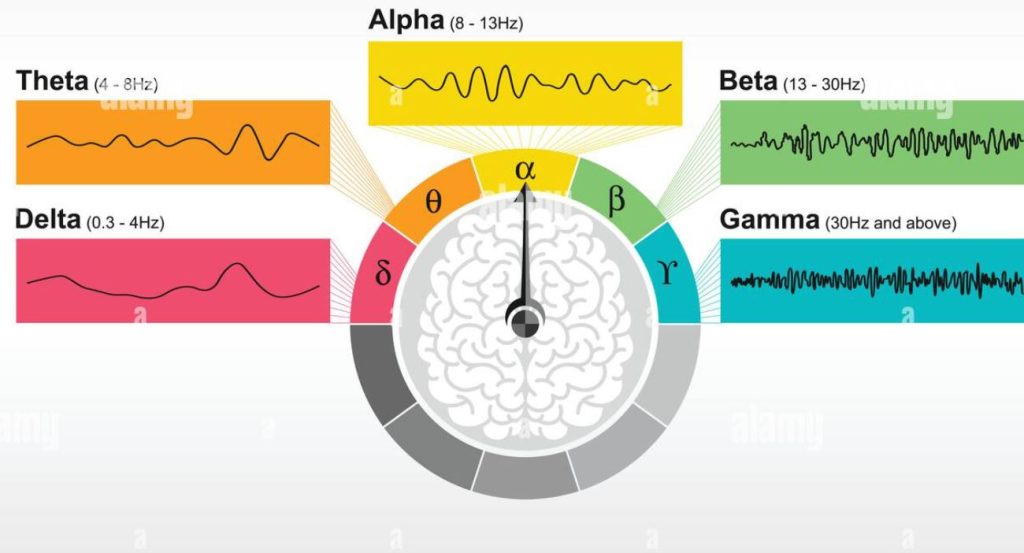
A B Γ D T Alpha Beta Gamma Delta(Dao) (ABCD) + a Reason – Tau, Tao, Dao
Theta vs Thetan Θ
Thetan adds an “n” or phonetically “en” to the word for the symbol theta
In Scientology https://en.wikipedia.org/wiki/Thetan beliefs, the concept of the thetan (/ˈθeɪtən/) is the spiritual being or self that constitutes the true identity of a person, and is distinct from the body and mind it inhabits and controls. Scientology teaches that a thetan is immortal, has lived through many past lives, does not cease to exist at body-death, and is typically reincarnated into a new body.
Scientology also teaches that a thetan can temporarily separate from the body in a process known as “exteriorization”. The concept forms the basis of Scientology’s understanding of consciousness, personal identity, and spiritual development. The term is derived from the Greek letter Θ, theta, which in Scientology represents “the source of life and life itself.” it shows the manifested container (Man) and It’s Axis or Source of the still monad in the center. (Θ)
https://altcodeunicode.com/alt-codes-greek-alphabet-letters
How to Set Brain into a Flow State
How to Set Brain into a Flow State to solve any problem and become a genius in any category. Activate your theta waves, activate your brain’s natural detox system.
Neuroscientists call it the “Gamma Wave” – Here’s why this matters:
Right now, your brain might be under attack from something called Zombie Cells. Yes, that’s the actual term used in National Geographic and top medical journals.
These “zombie” cells:
• Refuse to die
• Multiply inside your brain
• And slowly destroy your clarity, memory, and focus
It’s like a silent infestation—fogging your thoughts and speeding up brain aging. Links to knowledge below.
https://mindalive.org/blogs/news/activate-theta-brain-waves
https://drgregwells.com/articles/exercises-that-create-theta-brainwaves
theta sequences
The role of replay and theta sequences in mediating hippocampal-prefrontal interactions for memory and cognition
https://onlinelibrary.wiley.com/doi/10.1002/hipo.22821
Abstract
Sequential activity is seen in the hippocampus during multiple network patterns, prominently as replay activity during both awake and sleep sharp-wave ripples (SWRs), and as theta sequences during active exploration.
Although various mnemonic and cognitive functions have been ascribed to these hippocampal sequences, evidence for these proposed functions remains primarily phenomenological. Here, we briefly review current knowledge about replay events and theta sequences in spatial memory tasks.
We reason that in order to gain a mechanistic and causal understanding of how these patterns influence memory and cognitive processing, it is important to consider how these sequences influence activity in other regions, and in particular, the prefrontal cortex, which is crucial for memory-guided behavior.
For spatial memory tasks, we posit that hippocampal-prefrontal interactions mediated by replay and theta sequences play complementary and overlapping roles at different stages in learning, supporting memory encoding and retrieval, deliberative decision making, planning, and guiding future actions.
This framework offers testable predictions for future physiology and closed-loop feedback inactivation experiments for specifically targeting hippocampal sequences as well as coordinated prefrontal activity in different network states, with the potential to reveal their causal roles in memory-guided behavior.
Controlled entrainment of brain activity
https://doi.org/10.1016/j.neuroimage.2014.09.009
Getting the beat: Entrainment of brain activity by musical rhythm and pleasantness.
We test the rhythmic entrainment hypothesis; pleasant music is more entraining.
Visual target detection becomes synchronized to the musical meter.
Pleasant music produces entrainment at a finer-grained rhythmical level.
The caudate nucleus is selectively recruited in rhythmic entrainment.
Rhythm, movement, attention, and affect are intimately intertwined in music.
Abstract
Rhythmic entrainment is an important component of emotion induction by music, but brain circuits recruited during spontaneous entrainment of attention by music and the influence of the subjective emotional feelings evoked by music remain still largely unresolved.
In this study we used fMRI to test whether the metric structure of music entrains brain activity and how music pleasantness influences such entrainment. Participants listened to piano music while performing a speeded visuomotor detection task in which targets appeared time-locked to either strong or weak beats.
Each musical piece was presented in both a consonant/pleasant and dissonant/unpleasant version. Consonant music facilitated target detection and targets presented synchronously with strong beats were detected faster. FMRI showed increased activation of bilateral caudate nucleus when responding on strong beats, whereas consonance enhanced activity in attentional networks.
Meter and consonance selectively interacted in the caudate nucleus, with greater meter effects during dissonant than consonant music. These results reveal that the basal ganglia, involved both in emotion and rhythm processing, critically contribute to rhythmic entrainment of subcortical brain circuits by music.
Introduction
Rhythmic entrainment is a very common phenomenon: Who has not been caught with the foot tapping or the body moving to the music heard in the background? In the present study we directly ask the question how musical rhythm makes our brain act in synchrony with the music, and whether this effect depends on subjective pleasantness or not.
To study the nature of rhythmic entrainment and its neural underpinnings, we engaged participants in a functional magnetic resonance imaging (fMRI) paradigm while they performed a visuomotor attentional task in which targets appeared either in or out of synchrony with the music, and manipulated musical pleasantness by using either consonant or dissonant music.
The term entrainment describes a physical principle “whereby two rhythmic processes interact with each other in such a way that they adjust towards and eventually ‘lock in’ to a common phase and/or periodicity” (Clayton et al., 2005, p. 5).
The synchronization of bodily rhythms with music entails entrainment phenomena at different levels of the organism, which can take place at the motor level, the autonomic physiological level, the attentional level, and even the social level (Trost and Vuilleumier, 2013).
In this study we will focus on entrainment operating on attentional processes engaged during a visuomotor target detection task. Previous research on entrainment with EEG recordings showed that neuronal activity may synchronize to an external periodic signal (Nozaradan et al., 2011).
Moreover, most music is based on a precise temporal structure, i.e., meter, which creates the perception of a repetitive beat. It has been suggested that the discernment of musical beats emerges from the entrainment of neuronal populations that resonate at the frequency of the musical beats (Jones, 1987, Large and Kolen, 1994, Large, 2008).
Entrainment processes also operate on higher order harmonics of the beat frequency and lead to the perception of a distinctive hierarchy between individual beats. This hierarchy is thought to determine the perceived metrical structure of the music. Dynamic attending theory (DAT) further proposes that the perception of meter is an emergent process resulting from the time-locking of attentional cycles onto rhythmic events via music-neural coupling (Jones and Boltz, 1989). Thus, meter perception might reflect an ability to dynamically orient attention in time.
In keeping with this view, it has been shown that temporal expectancies can engender cross-modal integrative effects on attentional resources (Lange and Roder, 2006). This implies that if attention is enhanced at a specific moment in time, stimulus processing can be facilitated for all sensory modalities, independently of the task-relevant modality (Teder-Salejarvi et al., 2002).
Accordingly, behavioral findings suggest that entrainment induced by an auditory rhythm can influence visual attention (Escoffier et al., 2010) and that listening to classical music can entrain attentional resources in synchrony with the musical meter (Bolger et al., 2013, Tierney and Kraus, 2013).
In addition, it has been suggested that entrainment may constitute a key source of emotions experienced during music listening (Janata et al., 2012, Witek et al., 2014). According to a recent psychological framework proposed by Juslin and colleagues (Juslin et al., 2010), different bodily rhythms may synchronize to those present in the music, consequently generating emotional feelings via proprioceptive feedback mechanisms.
However, this framework does not specify which synchronization level is particularly critical, or whether the same principle applies to different levels of the system, including not only bodily and physiological rhythms but also higher cognitive processes such as attention. Moreover, few studies have investigated the neural mechanisms linking musical rhythms with entrainment and emotion.
Recent work using transcranial magnetic stimulation (TMS) reported that corticospinal excitability is increased during metrically strong rhythmical sequences (Cameron et al., 2012) or high-groove music (Stupacher et al., 2013).
However, an ideal candidate brain substrate for mediating such links might lie in the basal ganglia, as these structures are implicated in motor control (Jueptner and Weiller, 1998, Turner and Desmurget, 2010), rhythm processing (Grahn and Brett, 2007, Thaut et al., 2008), as well as pleasant emotional experiences (Salimpoor et al., 2011, Trost et al., 2012). The basal ganglia might therefore be well placed for integrating rhythmical information with both cognitive and affective components of musical experience.
On the other hand, cross-modal influences on attention and its deployment over time are known to recruit cortical areas in posterior parietal lobule (Coull and Nobre, 1998, Macaluso and Driver, 2001), including for synchronization of motor responses with auditory (non-musical) sequences (Bolger et al., 2014). Therefore, parietal attention systems might also contribute to the effect musical rhythm has on attention and entrainment.
Here, we directly tested how musical meter engenders cross-modal entrainment of visuomotor processes, by obtaining both behavioral and fMRI measures in human volunteers. We also investigated whether entrainment would interact with the affective appreciation of the music, and thus be enhanced by its pleasantness.
Based on previous research (Bolger et al., 2013), we expected that an attentional entrainment of visuomotor performance by concomitant music should make response times faster to visual targets appearing simultaneously with strong beats of the musical meter, as compared with targets appearing on weak beats.
In addition, we also tested the affective entrainment hypothesis, according to which there is a link between rhythmic entrainment processes and emotion induction via music (Juslin et al., 2010, Trost and Vuilleumier, 2013). Previous research already suggested that entrainment in terms of sensorimotor synchronization may enhance subjective experience of pleasantness even in non-musical conditions (Fairhurst et al., 2012, Janata et al., 2012).
Furthermore, motor or attentional entrainment appears directly linked to musical pleasantness, as rhythmical patterns of a certain complexity range are rated as more pleasant and evoke stronger feelings of groove (Witek et al., 2014). Here, however, we aimed at testing the affective entrainment hypothesis in a reverse causal direction, by determining whether (and how) positive affect elicited by pleasant music would enhance the rhythmic entrainment of attentional processes.
Specifically, we examined whether the pleasantness of music would produce a stronger entrainment of visuomotor performance, by comparing such effects during consonant (pleasant) and dissonant (unpleasant) music (Koelsch et al., 2006). On the one hand, due to greater enjoyment of the music, consonant harmony might be expected to increase entrainment and thus interact with the perception of the metrical structure.
On the other hand, in presence of consonant music with intact harmony, rhythm processing might focus at a different time scale, such that temporal expectations induced by pleasant consonant music would produce different or additive effects on entrainment. At the brain level, given their dual role in emotion processing and rhythm perception, we hypothesized that subcortical mechanisms in the basal ganglia might be involved in entrainment to music beat, but also responsible for any interaction between rhythm and pleasantness.
On the contrary, parietal and interconnected cortical areas should be implicated if these effects depend on temporal cross-modal attention processes.
Section snippets
Subjects
One group of 20 volunteers (13 females, mean age 25.8 years, SD ± 7.5) was tested only behaviorally in a first study. Subsequently, another group of 18 volunteers (11 females, mean age 24.1 years, SD ± 4.4) took part in the fMRI experiment, none of whom participated in the behavioral study. Participants self-reported normal hearing, stated to enjoy classical music, and had a minimum of 5 years of practical musical training. None of the participants were professional musicians. None had a history of
Behavioral results
A 2 × 2 repeated-measures ANOVA with the factors meter and consonance on reaction times of participants from the behavioral experiment revealed significant main effects for the two factors, meter (F(1,19) = 10.37, p < 0.005) and consonance (F(1,19) = 7.33, p < 0.014). RTs to visual targets were faster when presented on a strong (1st) relative to a weak (2nd) beat, and faster during consonant than dissonant music, a pattern compatible with an influence of both meter and pleasantness on visuomotor
Discussion
We used a novel cross-modal paradigm to study the effect of entrainment by musical rhythm on visuomotor performance and its modulation by affective appreciation. Based on the DAT (Jones, 1987), which proposes that attentional orienting may become synchronized to strong beats in music, we examined how musical meter influenced visual detection in a concomitant visual task and tested the affective entrainment hypothesis (Juslin et al., 2010) according to which pleasant affect associated with music
Conclusions
This is the first neuroimaging study that provides evidence for cross-modal attentional effects induced by entrainment to the meter of natural music and demonstrates specific neural substrates for such effects in both subcortical (basal ganglia) and cortical (parietal networks). Our results furthermore illuminate the neural basis of the DAT. We show that the caudate nucleus is sensitive to the metrical structure of music, even without explicit orienting of attention to the music.
Volume 13 – 2022 |
https://doi.org/10.3389/fpsyg.2022.928123
The biological dimensions of transcendent states: A randomized controlled trial
Abstract
This study evaluated the biological dimension of meditation and self-transcendent states. A convenience sample of 513 participants was drawn from attendees at a 4-day guided meditation workshop. Half were randomly assigned to an active placebo control intervention. All were assessed on a variety of measures, both psychological [anxiety, pain, posttraumatic stress disorder (PTSD), positive emotions, and transcendent states], and physiological (physical functioning).
Additional biological assessments including salivary immunoglobulin-A (SIgA), cortisol, and Quantitative Electroencephalography (qEEG) were obtained from subset of the Experimental group (N = 117). No significant difference in psychological symptoms or positive emotions was observed between Experimental and placebo groups at base. At post-test, significant improvements were noted in the Experimental group, including a 49.5% median increase in SIgA (p = 0.01), though cortisol remained unchanged. qEEG z-score analysis identified sustained stress reduction, including delta frequency band amplitude increases, high beta decreases, and faster acquisition of sustained alpha states (all p < 0.001).
Psychological symptoms also improved on all measures. At 6-month follow-up (N = 140), PTSD and somatic symptoms significantly improved from baseline, and post-test versus 6-month follow-up results indicated significant increases in happiness and spiritual and physical oneness, along with decreases in depressive symptoms.
These findings suggest that autonomic self-regulation and transcendent states may be measured in both biological and psychological dimensions and are associated with pervasive health benefits.
https://www.frontiersin.org/journals/psychology/articles/10.3389/fpsyg.2022.928123/full